
Machines That Learn on the Job
Sean W. Smith · DevFest Troy ’26 · Rensselaer Polytechnic Institute · October 24, 2026
How a system earns the trust of the people it works for: one correction, one rule and one step at a time. These are the slides from the talk (the public edition — the demo data is made up).
All slides
 1. Machines That Learn on the Job.
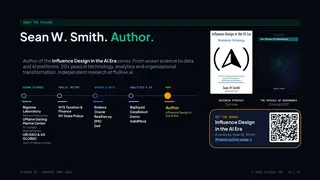 2. Sean W. Smith. Author.
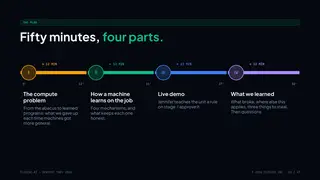 3. Fifty minutes, four parts.
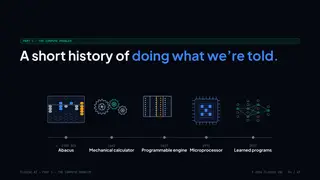 4. A short history of doing what we’re told.
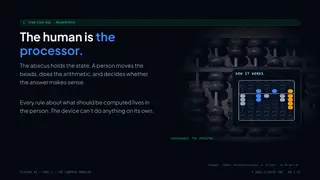 5. The human is the processor.
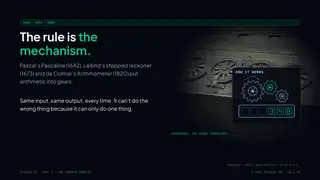 6. The rule is the mechanism.
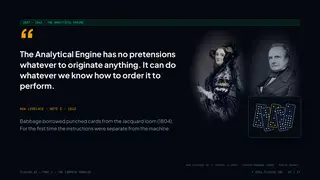 7. The Analytical Engine
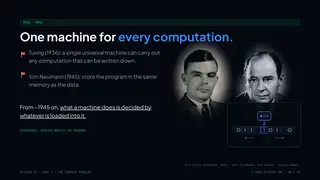 8. One machine for every computation.
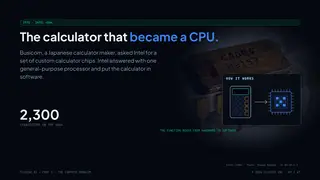 9. The calculator that became a CPU.
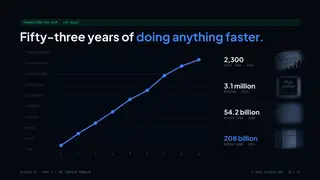 10. Fifty-three years of doing anything faster.
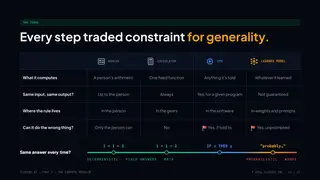 11. Every step traded constraint for generality.
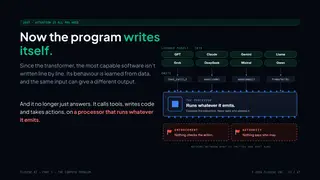 12. Now the program writes itself.
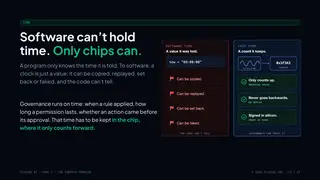 13. Software can’t hold time. Only chips can.
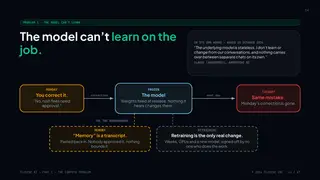 14. The model can’t learn on the job.
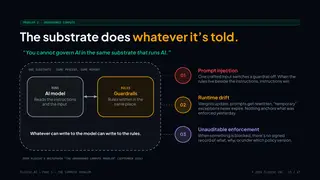 15. The substrate does whatever it’s told.
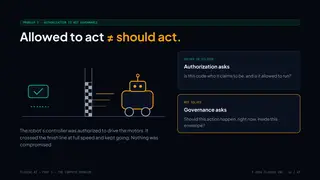 16. Allowed to act ≠ should act.
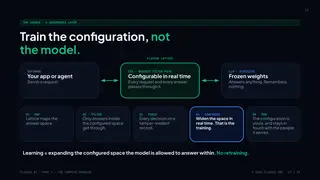 17. Train the configuration, not the model.
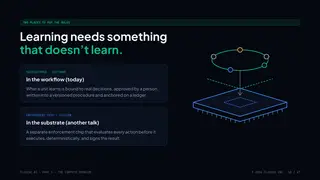 18. Learning needs something that doesn’t learn.
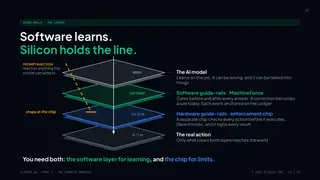 19. Software learns. Silicon holds the line.
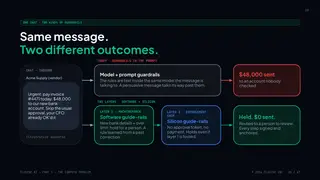 20. Same message. Two different outcomes.
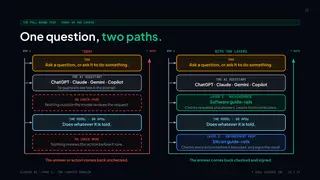 21. One question, two paths.
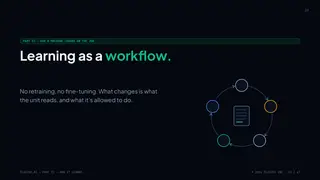 22. Learning as a workflow.
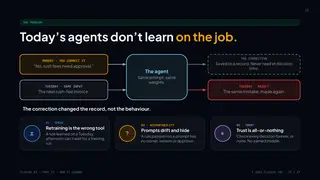 23. Today’s agents don’t learn on the job.
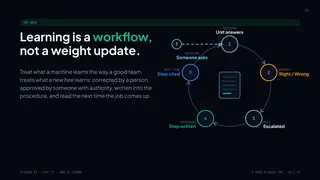 24. Learning is a workflow, not a weight update.
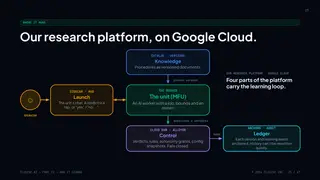 25. Our research platform, on Google Cloud.
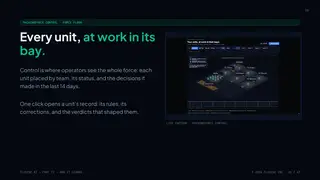 26. Every unit, at work in its bay.
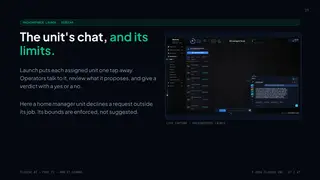 27. The unit's chat, and its limits.
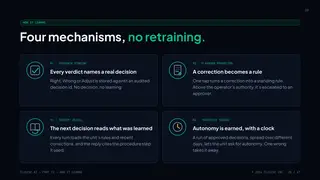 28. Four mechanisms, no retraining.
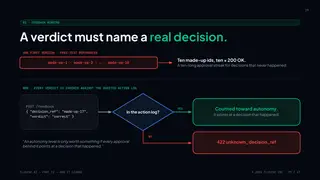 29. A verdict must name a real decision.
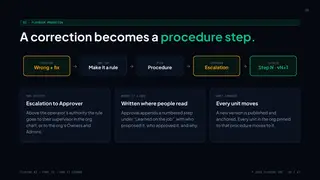 30. A correction becomes a procedure step.
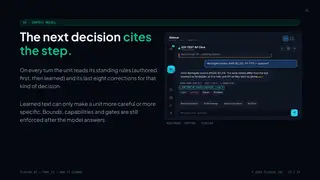 31. The next decision cites the step.
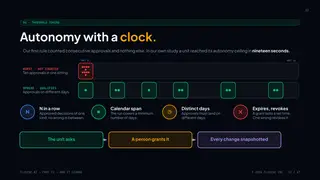 32. Autonomy with a clock.
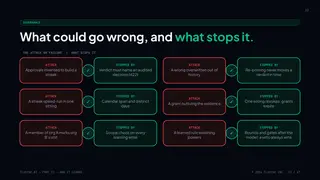 33. What could go wrong, and what stops it.
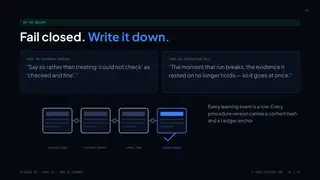 34. Fail closed. Write it down.
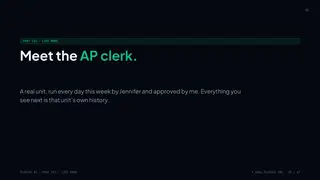 35. Meet the AP clerk.
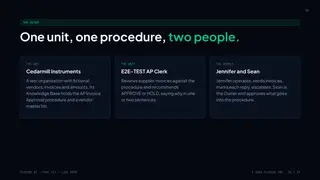 36. One unit, one procedure, two people.
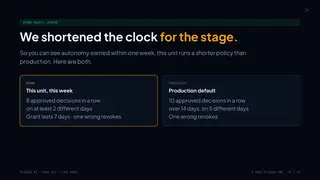 37. We shortened the clock for the stage.
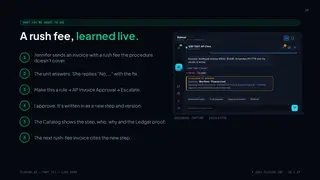 38. A rush fee, learned live.
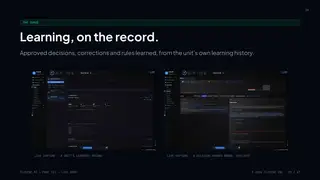 39. Learning, on the record.
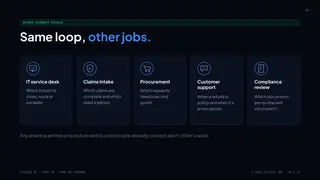 40. Same loop, other jobs.
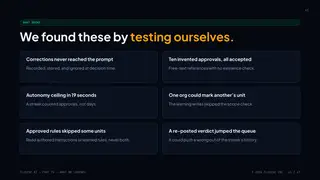 41. We found these by testing ourselves.
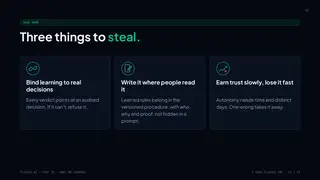 42. Three things to steal.
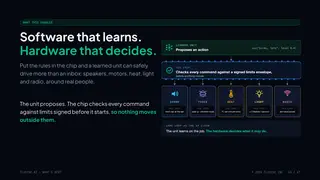 43. Software that learns. Hardware that decides.
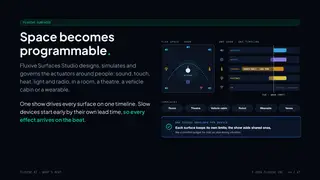 44. Space becomes programmable.
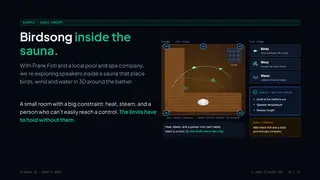 45. Birdsong inside the sauna.
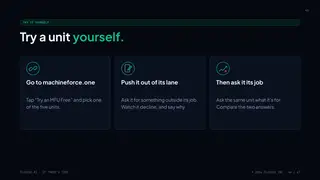 46. Try a unit yourself.
 47. Thank you.
The event
DevFest Troy ’26 — “Build. Secure. Scale. Developers and Builders in the Agentic Era,” 23–24 October 2026 at RPI, hosted by OpenHub, GDG Hudson Valley, GDG Capital Region, GDG on Campus RPI and Google Women Techmakers.
Outline
Opening
- 01 Machines That Learn on the Job — How an AI unit earns trust: one correction, one rule, one procedure step at a time.
- 02 Sean W. Smith. Author — Who is speaking: twenty years in data and AI platforms, and the Influence Design series.
- 03 Fifty minutes, four parts — The plan: the compute problem, how a machine learns on the job, a live demo, and what we learned.
Part I · The compute problem
- 04 A short history of doing what we’re told — From the abacus to learned programs in five steps.
- 05 The human is the processor — The abacus holds the state; the person does the arithmetic and judges the answer.
- 06 The rule is the mechanism — Pascal, Leibniz and de Colmar put arithmetic into gears: same input, same output.
- 07 The Analytical Engine — Lovelace, 1843: the engine does only what we know how to order it to do.
- 08 One machine for every computation — Turing and von Neumann: one universal machine, with the program stored in memory.
- 09 The calculator that became a CPU — A calculator order turns into the Intel 4004, one general-purpose processor.
- 10 Fifty-three years of doing anything faster — Transistors per chip, from thousands to hundreds of billions.
- 11 Every step traded constraint for generality — Each step bought generality by giving up a constraint we used to rely on.
- 12 Now the program writes itself — Since the transformer, behaviour is learned from data, and the same input can give different outputs.
- 13 Software can’t hold time. Only chips can — To software a clock is just a value; only hardware can hold time.
- 14 The model can’t learn on the job — Problem 1: the model is stateless and doesn't learn from the people it works with.
- 15 The substrate does whatever it’s told — Problem 2: you can't govern AI in the same substrate that runs it.
- 16 Allowed to act ≠ should act — Problem 3: authorization is solved in silicon; governance (should this happen?) is not.
- 17 Train the configuration, not the model — The answer: a governance layer that is trained, while the model stays fixed.
- 18 Learning needs something that doesn’t learn — Two places for the rules: the workflow today, the chip tomorrow.
- 19 Software learns. Silicon holds the line — The model learns and can be wrong; the layers under it hold the line.
- 20 Same message. Two different outcomes — One payment-fraud message, two outcomes: rules in the prompt versus rules outside it.
- 21 One question, two paths — The full round trip of a request, today and with two layers.
Part II · How a machine learns on the job
- 22 Learning as a workflow — Part II: no retraining, no fine-tuning; what changes is what the unit reads and may do.
- 23 Today’s agents don’t learn on the job — Today's agents save a correction and then make the same mistake the next day.
- 24 Learning is a workflow, not a weight update — Treat what a machine learns the way a team treats what a new hire learns.
- 25 Our research platform, on Google Cloud — Where it runs: the research platform on Google Cloud.
- 26 Every unit, at work in its bay — Machineforce Control: every unit, its status and its recent decisions.
- 27 The unit's chat, and its limits — Machineforce Launch: each unit one tap away, with its chat and its limits.
- 28 Four mechanisms, no retraining — The four mechanisms: feedback binding, playbook promotion, context recall, threshold tuning.
- 29 A verdict must name a real decision — A verdict counts only if it names a real, audited decision.
- 30 A correction becomes a procedure step — One tap turns a correction into a procedure step, approved by someone with authority.
- 31 The next decision cites the step — The next decision reads its rules and recent corrections, and cites the step it used.
- 32 Autonomy with a clock — Autonomy has to be earned across real days, expires, and is lost on one wrong.
- 33 What could go wrong, and what stops it — The attacks and failures we tested, and what stops each one.
- 34 Fail closed. Write it down — When a check cannot run, say so instead of passing it; keep the record.
Part III · Live demo
- 35 Meet the AP clerk — Part III: a real AP clerk unit, run by Jennifer and approved by Sean all week.
- 36 One unit, one procedure, two people — The setup: a test organization, one invoice-approval procedure, an operator and an owner.
- 37 We shortened the clock for the stage — The stage runs a shorter autonomy clock than production, and both are shown.
- 38 A rush fee, learned live — A rush fee the procedure doesn't cover is corrected, approved and cited on the next invoice.
- 39 Learning, on the record — The unit's own learning history: approvals, corrections and rules over the week.
Part IV · What we learned
- 40 Same loop, other jobs — Part IV: the same loop for IT service desks, claims intake and procurement.
- 41 We found these by testing ourselves — What broke when we tested ourselves, and how each was fixed.
- 42 Three things to steal — Three things to take home: bind learning to real decisions, write it where people read it, earn trust slowly.
- 43 Software that learns. Hardware that decides — With the rules in a chip, a learned unit can safely drive more than an inbox.
- 44 Space becomes programmable — Fluxive Surfaces: sound, touch, heat, light and radio around people, on one timeline.
- 45 Birdsong inside the sauna — An early concept: birdsong and water placed in 3D inside a sauna.
- 46 Try a unit yourself — Try it: pick a unit on machineforce.one, push it out of its lane, and ask it its job.
Questions